

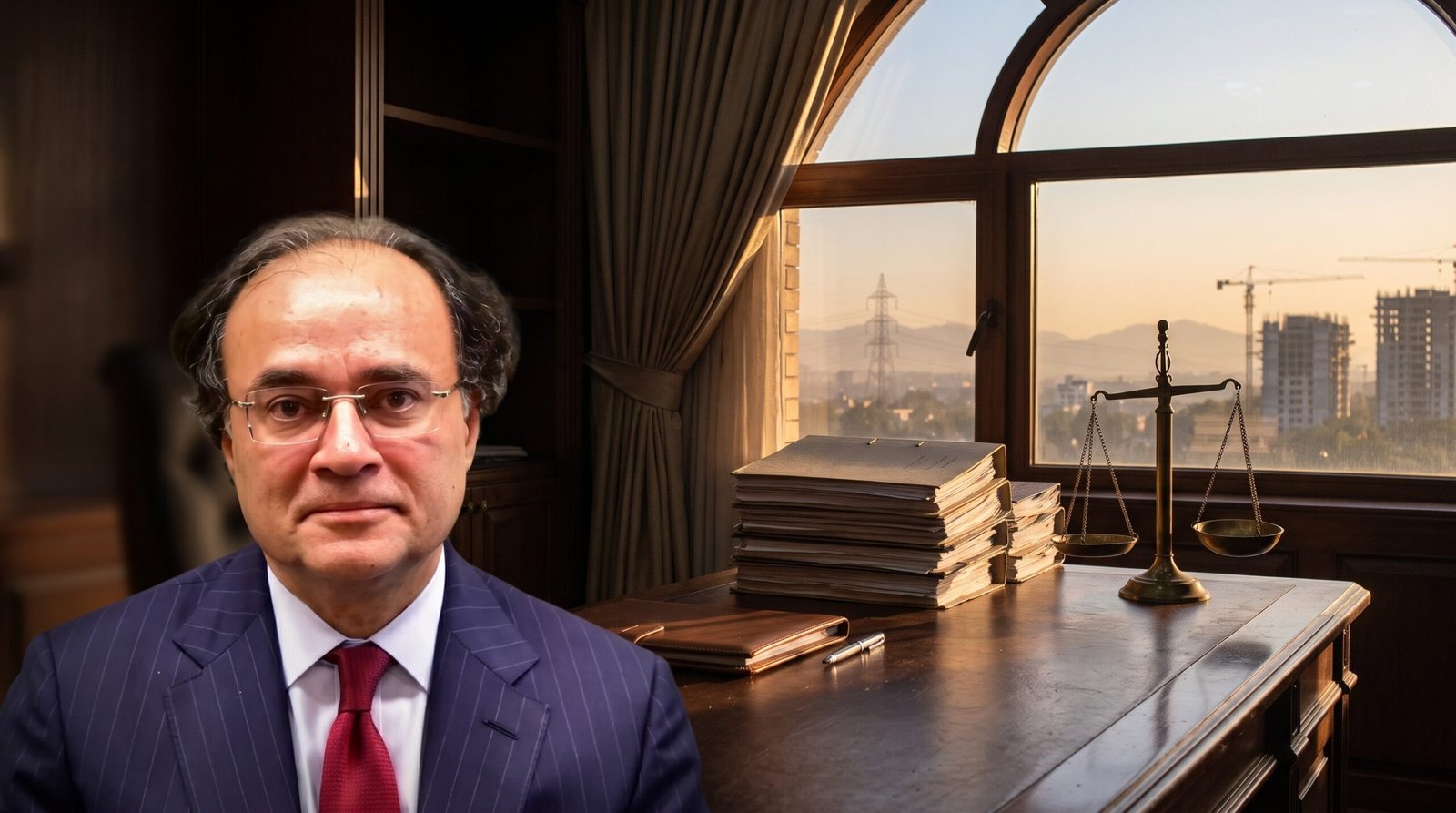
Federal Minister for Finance and Revenue Muhammad Aurangzeb’s economic performance has come under scrutiny as Pakistan continues to grapple with mounting public debt, weak foreign direct investment, inadequate economic growth and persistent pressure on household purchasing power, despite improvements in macroeconomic stability.
Four economists — Dr Ikramul Haq, Dr Qais Aslam, Dr Aima Mehdi and Hina Ayra — have provided assessments to The Scoop, questioning whether the government’s economic policies have moved beyond fiscal tightening, IMF-backed stabilisation and debt management towards the structural reforms necessary for sustainable prosperity.
Their observations present a critical but nuanced picture of Aurangzeb’s tenure since March 2024.
While the finance minister has overseen improvements in inflation, fiscal balances, borrowing costs and external financial confidence, economists argue that Pakistan remains constrained by an inequitable taxation system, expensive energy, insufficient productive investment and dependence on external financing.
The latest debt figures add urgency to that debate.
According to Finance Ministry figures reported on November 3, Pakistan’s public and publicly guaranteed debt reached Rs90.98 trillion at the end of June 2026, compared with Rs84.77 trillion a year earlier — an increase of Rs6.21 trillion, or approximately 7.3 per cent.
Total public debt excluding guarantees stood at Rs86.7 trillion, compared with Rs80.5 trillion in June 2025 and approximately Rs71.25 trillion in June 2024.
This represents an increase of roughly Rs15.45 trillion in total public debt over two financial years.
At the same time, Pakistan’s economic growth for FY2026 was revised down to 3.65 per cent, while foreign direct investment declined by approximately 34 per cent to $1.64 billion.
The contrasting indicators raise a fundamental question: has Aurangzeb succeeded in transforming Pakistan’s economic fundamentals, or has he primarily stabilised a system that remains structurally vulnerable?
Pakistan’s Debt Burden Continues To Grow
The latest figures reveal the scale of Pakistan’s borrowing challenge.
Public and publicly guaranteed debt increased from Rs84.77 trillion in June 2025 to Rs90.98 trillion in June 2026, while the corresponding debt-to-GDP ratio declined from 74.3 per cent to 71.7 per cent.
Public debt excluding guarantees rose from Rs80.5 trillion to Rs86.7 trillion during the same period, although its ratio to GDP declined from 70.6 per cent to 68.3 per cent.
These measures are distinct: public and publicly guaranteed debt includes government-guaranteed liabilities, while the narrower public debt figure excludes those guarantees.
The decline in debt ratios is a positive development, but the expanding absolute debt stock demonstrates that Pakistan’s financing requirements remain substantial.
The government’s Annual Borrowing Plan for FY2027 projected gross financing requirements of approximately Rs28.65 trillion, reflecting the budget deficit and debt obligations falling due during the year.
The figures also underline Pakistan’s exposure to refinancing and interest-rate risks.
According to the latest reported debt breakdown, domestic government securities remain heavily exposed to changes in interest rates, with only around 27 per cent carrying fixed rates.
There has, however, been a significant improvement in debt-servicing costs.
Interest payments declined from approximately Rs8.88 trillion in FY2025 to Rs6.95 trillion in FY2026, a reduction of Rs1.93 trillion, or nearly 22 per cent.
That improvement provides the government with greater fiscal breathing space.
The challenge is whether this space is being used to finance productive development and reforms capable of reducing Pakistan’s long-term borrowing requirements.
Hina Ayra: Stabilisation Achieved, But Sustainable Growth Remains Elusive
Economist Hina Ayra offered a balanced but critical assessment of Aurangzeb’s performance, acknowledging the government’s achievements in restoring macroeconomic stability while questioning its failure to generate stronger investment and growth.
In her detailed response to The Scoop, Ayra said the finance minister had been relatively successful in stabilising the economy but considerably less successful in converting that stability into sustainable economic expansion.
She recalled that Aurangzeb inherited a difficult economic environment in March 2024, following a period of severe external financing pressures, depleted reserves, exceptionally high inflation and weakened investor confidence.
Preventing a financial crisis and restoring stability were legitimate priorities, she argued.
However, the subsequent recovery needed to be evaluated against the broader economic picture.
Ayra pointed to FY2026 GDP growth of approximately 3.65 per cent, an investment-to-GDP ratio of around 14.38 per cent and a decline in foreign direct investment to $1.64 billion.
She also highlighted the increase in public and publicly guaranteed debt to Rs90.98 trillion, notwithstanding the improvement in its ratio to GDP.
In her assessment, these indicators suggest that financial stabilisation has progressed further than productive investment and sustainable growth.
Three Major Policy Failures
Ayra identified three major shortcomings in the finance minister’s economic strategy: incomplete tax reform, failure to establish a credible investment- and export-led growth model, and inadequate restructuring of the energy sector.
On taxation, she argued that the government had continued to rely disproportionately on indirect taxes, withholding mechanisms and documented taxpayers while leaving influential and relatively undertaxed economic segments insufficiently integrated into the system.
She cited an IMF estimate suggesting that the effective taxation of agricultural income remained extremely low relative to the sector’s economic contribution.
According to Ayra, the government should have used the IMF programme to pursue a comprehensive federal-provincial taxation agreement, improve documentation of retail and real estate transactions, and eliminate unjustified exemptions.
Instead, she argued, much of the fiscal burden continued to fall on existing taxpayers and consumers.
Her second criticism concerned investment.
Ayra maintained that Pakistan could not sustainably finance its imports and external obligations through remittances, bilateral deposits, IMF assistance and repeated debt rollovers.
The decline in foreign direct investment, she argued, reflected persistent concerns over expensive energy, inconsistent taxation, regulatory uncertainty, weak contract enforcement and policy discontinuity.
Rather than relying primarily on investment announcements, the government should have prioritised commercially viable projects in export-oriented manufacturing, minerals, agricultural processing, information technology and logistics.
Her third criticism concerned energy-sector reform.
Ayra argued that repeated tariff increases and cost-recovery measures had burdened households and businesses without sufficiently addressing circular debt, distribution losses, theft, inefficient generation and expensive contractual arrangements.
She maintained that energy reform had too often been treated as a pricing exercise rather than an institutional and productivity challenge.
A comprehensive restructuring programme, she argued, should prioritise distribution-company governance, competition, transmission efficiency, legally viable contractual reforms and targeted protection for vulnerable consumers.
Ayra also warned that economic policymaking had become excessively focused on primary surpluses, reserve accumulation and IMF reviews, while employment, human capital, agricultural productivity and household purchasing power received inadequate attention.
Nevertheless, she cautioned against attributing every structural failure solely to the finance minister.
Major reforms require political ownership, coordination between federal and provincial governments and a willingness to challenge entrenched economic interests.
The finance minister, she argued, remains responsible for ensuring that fiscal consolidation supports a credible development strategy.
Dr Ikramul Haq: Tax Collection Is Not The Same As Tax Reform
Taxation expert Dr Ikramul Haq delivered a similarly critical assessment of the government’s revenue strategy, arguing that Aurangzeb had prioritised fiscal consolidation and higher collection targets without fundamentally restructuring Pakistan’s taxation system.
In comments to The Scoop, Dr Haq distinguished between revenue mobilisation and genuine structural tax reform.
He argued that the government’s approach remained heavily influenced by IMF requirements for primary surpluses and increased revenue.
According to Dr Haq, the principal burden continued to fall on documented businesses, corporate taxpayers, salaried individuals and consumers through withholding taxes, advance taxation, sales tax and petroleum levies.
Meanwhile, substantial agricultural incomes, speculative real estate gains, untaxed wealth and privileged economic interests remained inadequately taxed, he maintained.
Dr Haq acknowledged improvements in revenue collection, fiscal reporting and digitalisation initiatives.
However, he cautioned against confusing administrative modernisation with genuine reform.
He identified delayed refunds, excessive advance collection, dependence on withholding agents and coercive enforcement as persistent weaknesses in the Federal Board of Revenue’s approach.
The taxation expert also questioned the government’s reliance on primary fiscal surpluses as a measure of economic success.
He argued that fiscal discipline must be evaluated alongside debt servicing, development expenditure, public services and the fairness of the taxation system.
For Dr Haq, sustainable fiscal reform requires predictable taxation, a broader and more equitable revenue base, reduced privileges and stronger accountability in public expenditure.
His assessment challenges the government’s claim that improved tax collection alone demonstrates successful economic restructuring.
Dr Qais Aslam Warns Of A Continuing Debt Trap
Professor of Economics Dr Qais Aslam has questioned whether Pakistan’s improvements in selected financial indicators have translated into meaningful social and economic progress.
In his assessment of economic performance between 2024 and 2026, shared with The Scoop, Dr Aslam acknowledged improvements in the nominal size of the economy and certain industrial and investment indicators.
However, he maintained that these gains had been overshadowed by rising debt, insufficient employment opportunities, pressure on purchasing power and continued dependence on external financial assistance.
Dr Aslam described Pakistan’s predicament as a “classical debt trap”, arguing that fresh borrowing and refinancing had become recurring features of economic management.
His concern centres on whether Pakistan is developing the productive capacity required to service its obligations without repeatedly relying on new loans and external support.
He also highlighted the importance of overseas workers’ remittances in supporting Pakistan’s external financial position.
While remittances provide valuable foreign exchange, Dr Aslam argued that they cannot substitute for stronger exports, productive investment and domestic economic competitiveness.
The economist further identified high energy, transport and taxation costs as major pressures on businesses and households.
In his assessment, these structural costs constrain production, discourage investment and weaken the purchasing power of ordinary Pakistanis.
He argued that monetary tightening alone could not adequately address inflationary pressures arising from expensive energy and essential production inputs.
Dr Aslam’s broader criticism is that improvements in financial indicators have not produced sufficiently widespread gains in employment, real incomes and economic opportunity.
Also Read: Zarea’s Rs3 Billion Rights Issue: Why Is A Profitable Company Raising Equity To Repay Sukuk?
Dr Aima Mehdi: Fiscal Tightening Cannot Replace Economic Development
Economist Dr Aima Mehdi questioned the government’s emphasis on fiscal discipline and declining inflation, arguing that restrictive economic policies had come at a cost to investment and productive activity.
In comments shared with The Scoop, Dr Mehdi maintained that Pakistan’s economic and fiscal position remained fragile despite the improvements highlighted by the government.
She attributed part of the disinflationary process to the State Bank of Pakistan’s earlier restrictive monetary policy, under which high interest rates discouraged borrowing, consumption and investment.
Such policies can help reduce inflationary pressures, but they can also constrain business activity and economic growth, she argued.
Monetary policy is formally determined by the independent central bank rather than the finance minister alone, although its effects interact with the government’s wider economic programme.
Dr Mehdi also questioned whether the government’s efforts to increase tax registration had delivered a sufficiently fair expansion of the revenue base.
She argued that salaried taxpayers had faced additional pressure on their take-home incomes while wealthier and less-documented economic groups remained inadequately taxed.
Her concerns broadly echoed those raised by Dr Haq and Ayra.
Development Spending And Future Prosperity
Dr Mehdi expressed concern that fiscal tightening under the IMF-supported programme could undermine education, healthcare and infrastructure development.
In her assessment, expenditure restraint affecting these sectors would weaken Pakistan’s future growth potential.
She argued that the government should have placed greater emphasis on addressing the debt crisis, implementing energy and taxation reforms, improving the business environment and attracting foreign direct investment.
For Dr Mehdi, financial stabilisation was not sufficient if the policies used to achieve it constrained the investment and human development needed for long-term prosperity.
Her assessment raises a broader question about Pakistan’s fiscal priorities: whether the government is protecting essential development expenditure while meeting its stabilisation targets.
Economic Growth Remains Below Pakistan’s Requirements
Official data underline the challenge of translating financial stability into stronger economic expansion.
The Pakistan Bureau of Statistics revised GDP growth for FY2026 from an initial estimate of 3.70 per cent to 3.65 per cent at the National Accounts Committee meeting on October 19.
The revised figures showed that growth slowed to 2 per cent during the final quarter of the financial year.
The nominal size of Pakistan’s economy reached approximately $450.4 billion.
However, the pace of growth remained below the government’s original target of 4.2 per cent.
For a country with a population exceeding 240 million, sustained growth at around 3.6 per cent presents significant challenges for employment generation, poverty reduction and improvements in living standards.
The investment-to-GDP ratio remained around 14.38 per cent, reflecting the limited scale of capital formation relative to Pakistan’s development requirements.
Foreign direct investment fell by approximately 34 per cent to $1.64 billion during FY2026.
This decline raises questions about investor confidence and the effectiveness of policies intended to attract productive international capital.
While foreign investment can fluctuate because of large individual transactions and global conditions, sustained investment weakness remains a serious obstacle to Pakistan’s economic transformation.
Panda Bonds, Samurai Bonds And The Search For New Financing
Aurangzeb’s strategy to diversify Pakistan’s borrowing sources has introduced another dimension to the debate over debt sustainability.
In May 2026, Pakistan completed its inaugural Panda bond issuance in China’s domestic capital market, raising 1.75 billion yuan, equivalent to approximately $258 million.
The three-year instrument carried a coupon of 2.5 per cent and benefited from credit-enhancement support provided by the Asian Development Bank and Asian Infrastructure Investment Bank.
The transaction was linked to financing sustainable and green infrastructure projects.
Its relatively low coupon and strong investor demand represented an achievement in expanding Pakistan’s access to international capital markets.
However, the government is reportedly planning a second Panda bond issuance of approximately $500 million around April or May 2027.
The proposed transaction comes amid continuing external financing requirements and reported difficulties in fully refinancing certain Chinese commercial loans.
Pakistan has also explored additional international borrowing instruments, including sovereign Sukuk, potential Samurai bonds, Eurobond structures and rupee-denominated instruments settled in foreign currency.
Diversifying borrowing sources is not inherently problematic.
New instruments can improve market access, extend maturities, reduce refinancing concentration and potentially lower borrowing costs.
However, the effectiveness of such financing depends on the terms of each transaction.
The proposed Panda bond’s coupon, maturity, guarantee arrangements, fees, currency risks and intended use of proceeds will be critical in determining whether it strengthens Pakistan’s debt position.
A low headline coupon alone does not necessarily establish the full economic cost of a borrowing transaction.
The broader concern raised by economists is whether international financing is supporting productive investment or simply helping the government manage recurring repayment obligations.
Pakistan’s return to capital markets will become a more convincing sign of economic recovery if it is accompanied by stronger exports, greater private investment and a declining need for repeated refinancing.
Inflation Has Declined, But Living Costs Remain High
The decline in inflation is among the government’s most significant achievements.
Pakistan experienced exceptionally high inflation during the period preceding Aurangzeb’s appointment, with annual consumer inflation reaching approximately 38 per cent in May 2023.
Subsequent disinflation has eased the pace at which prices are rising.
However, lower inflation does not mean that prices have returned to their previous levels.
For households already affected by successive increases in food, electricity, transport, housing and education costs, the accumulated financial burden remains considerable.
Ayra, Dr Aslam and Dr Mehdi all raised concerns about the gap between macroeconomic improvements and household welfare.
Their assessments suggest that economic performance should be measured not only through inflation and reserve statistics but also through real wages, employment, purchasing power and access to essential services.
Without sustained growth in incomes and productive employment, the benefits of stabilisation may remain limited for a large proportion of the population.
Aurangzeb’s Defence: Stability Was A Necessary First Step
A balanced assessment of Aurangzeb’s tenure must recognise the difficult economic circumstances he inherited.
Pakistan entered 2024 following severe balance-of-payments pressures, weak foreign exchange buffers, high inflation and uncertainty over external financing.
Restoring macroeconomic confidence, maintaining the IMF programme and reducing immediate financial risks were legitimate priorities.
The government has since reported improvements in fiscal balances, reserve buffers, inflation and borrowing costs.
Interest expenditure fell substantially in FY2026, while both public debt and public-and-guaranteed-debt ratios declined relative to GDP.
Aurangzeb has also advocated an economic model based on exports, private investment, tariff rationalisation, tax administration reform and reduced dependence on import-driven consumption.
These objectives provide a substantive basis for defending the government’s policy direction.
Furthermore, Pakistan’s structural weaknesses — including energy-sector inefficiencies, a narrow tax base, poorly performing public enterprises and inadequate export competitiveness — predate Aurangzeb’s appointment.
Resolving them requires political commitment, institutional coordination and sustained implementation beyond the Ministry of Finance.
Nevertheless, the existence of longstanding problems does not remove the responsibility of the incumbent government to demonstrate measurable progress in addressing them.
The central question is whether the stabilisation achieved under Aurangzeb is being converted into a credible programme of economic transformation.
Also Read: Acquirers Officially Withdraw Bid For 6.02% Stake In Escorts Investment Bank
Finance Minister Does Not Respond To The Scoop’s Questions
As part of its reporting, The Scoop approached Federal Minister for Finance and Revenue Muhammad Aurangzeb directly through WhatsApp and sent him a detailed questionnaire seeking his response to the issues examined in this investigation.
The questions covered rising public debt, Pakistan’s dependence on IMF support, economic growth, taxation policies, international bond issuances, industrial competitiveness, inflation, household purchasing power and the government’s reform priorities.
The finance minister was also invited to respond to the concerns raised by economists and to identify what he considered the principal achievements of his tenure.
Aurangzeb had not responded to The Scoop’s questions by the time this report was filed.
His publicly stated policy positions and the government’s reported achievements have nevertheless been included to provide readers with the relevant official perspective.
The Bigger Question: Has Pakistan Achieved Stability Without Structural Reform?
After more than two and a half years in office, Muhammad Aurangzeb’s economic record presents a fundamental contradiction.
Pakistan has made measurable progress in restoring macroeconomic stability, reducing inflationary pressures and lowering interest expenditure.
Yet the country continues to face substantial debt obligations, weak foreign direct investment, modest growth, expensive energy and serious questions about taxation fairness and household welfare.
The four economists consulted by The Scoop differ in emphasis but converge on a central concern.
Dr Ikramul Haq questions the fairness and structure of revenue mobilisation.
Dr Qais Aslam warns that repeated borrowing and insufficient productive capacity could perpetuate Pakistan’s debt dependence.
Dr Aima Mehdi challenges the economic and developmental costs of prolonged fiscal tightening.
Hina Ayra acknowledges the achievements of stabilisation while identifying tax reform, investment-led growth and energy restructuring as major areas of inadequate progress.
Their assessments do not establish that every economic difficulty is attributable to Aurangzeb.
They do, however, challenge the government’s ability to present stabilisation as sufficient evidence of economic success.
For Pakistan, the decisive test is whether financial stability can be transformed into stronger exports, productive investment, competitive industries, sustainable employment and rising real incomes.
For Aurangzeb, the ultimate measure of success will not be the number of IMF reviews completed, the size of new bond issuances or the achievement of fiscal targets alone.
It will be whether Pakistan becomes less dependent on external financing and more capable of generating prosperity through its own productive economy.
Until those improvements become visible in investment, employment, exports and household living standards, the finance minister’s economic record will remain open to serious scrutiny.