

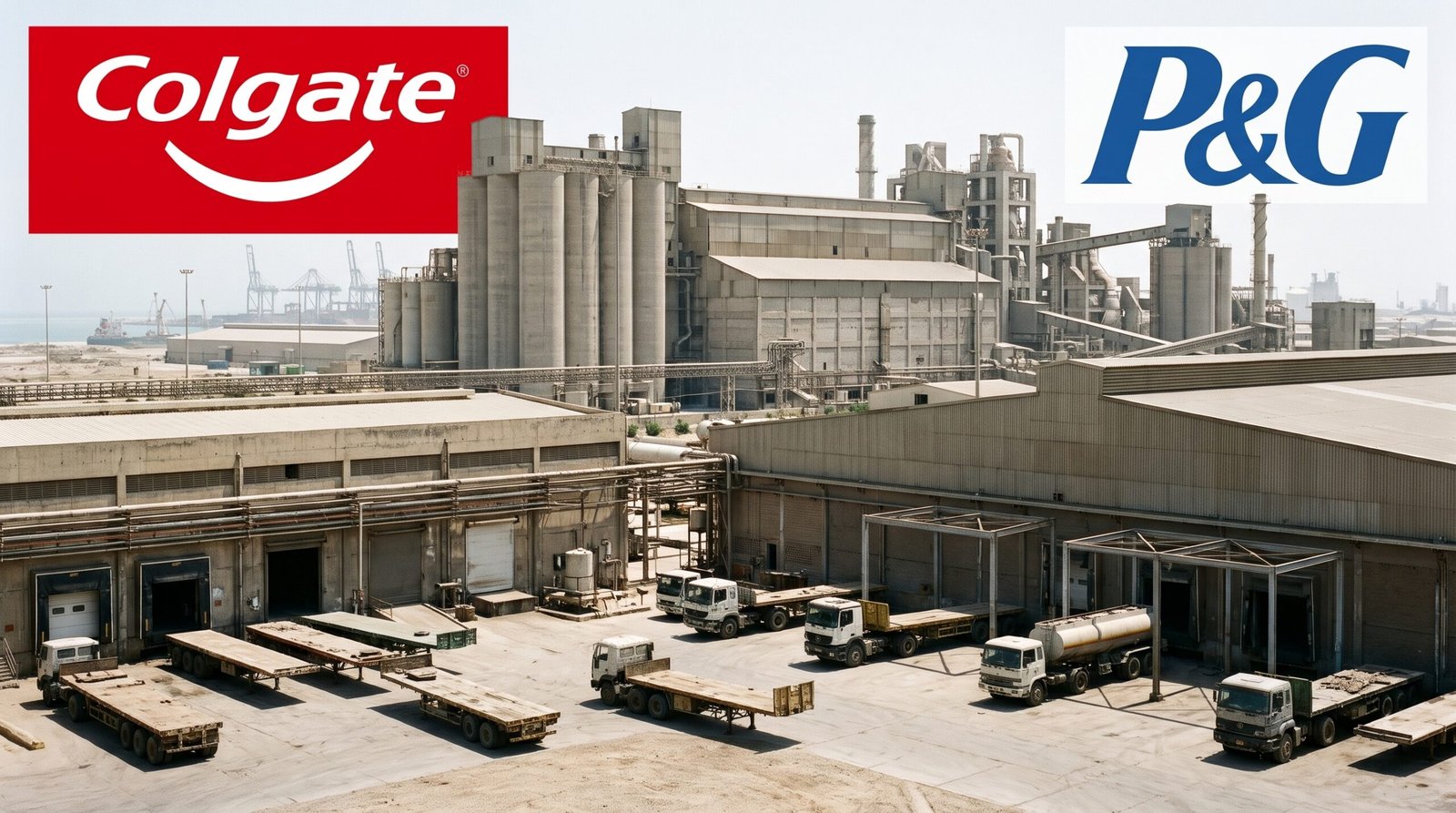
KARACHI, Nov. 3, 2026 — Over a year after Procter & Gamble (P&G) announced its exit from manufacturing operations in Pakistan, rival consumer goods giant Colgate-Palmolive (Pakistan) Limited has stepped in to acquire the company’s sprawling 58-acre factory at Port Qasim. On October 28, Colgate notified the Pakistan Stock Exchange (PSX) that it had officially signed an asset purchase agreement for P&G’s land, manufacturing facility, and related assets. The deal, whose price remains undisclosed, is currently pending approval from the Competition Commission of Pakistan (CCP).
P&G’s Manufacturing Retreat
P&G’s journey in Pakistan began in 1991 as an importer of cleaning products before transitioning into local manufacturing. Over 25 years, the company invested $150 million into the country, initially producing Ariel detergent and Safeguard soap at a plant in Hub, Balochistan. In 2019, P&G injected a further $50 million to establish the Port Qasim facility to manufacture Pantene and Head & Shoulders shampoos locally. By 2024, local manufacturing accounted for over 98% of P&G Pakistan’s revenue.
However, in October 2025, P&G announced it would wind down its Pakistani manufacturing operations as part of a global restructuring effort. While the company’s brands will continue to be sold through third-party distributors, P&G is actively shedding the risks associated with owning local factories. This strategy was already evident in September 2024, when P&G sold its Hub soap plant to Nimir Industrial Chemicals for Rs 816 million. Nimir now produces Safeguard under license, highlighting P&G’s shift towards retaining brand ownership while outsourcing production capital risk.
Also Read: Cherat Cement Seals Rs24 Billion Deal To Acquire Controlling 64% Stake In Nimir Industrial Chemicals
Why Colgate is Expanding
For Colgate-Palmolive, a company incorporated in 1977 as National Detergents Limited and 30%-owned by its American namesake, the acquisition addresses three critical operational needs:
- Capacity Expansion: Colgate currently operates three factories—two in Kotri and one in Lahore—spanning a combined 26 acres. With the 58-acre Port Qasim site alone being more than double its existing footprint, Colgate is acquiring much-needed space to relieve its current 85% plant utilization rate.
- Strategic Location: Situated at Karachi’s second port, the Port Qasim facility will significantly shorten Colgate’s supply chains. The company relies heavily on the Gulf for raw materials and has faced disruptions and inflated commodity prices due to regional conflicts.
- Financial Liquidity: Colgate is exceptionally well-positioned to fund the purchase outright without borrowing. As of September 30, 2026, the company held Rs 7.6 billion in cash alongside Rs 24 billion in short-term investments.
Despite this strong cash position, Colgate faces near-term macroeconomic pressures. In the quarter ending September 30, 2026, the company’s cost of sales outpaced net sales growth, causing its gross margin to drop from 34.8% to 29.4%.
The final hurdle for the acquisition is regulatory clearance. The CCP must review the deal to ensure market competitiveness, particularly given Colgate’s existing dominance with brands like Lemon Max. If approved, the transaction will mark a significant shift in Pakistan’s fast-moving consumer goods landscape, transferring a major industrial asset from a retreating multinational to a thriving local entity backed by foreign partnership.