

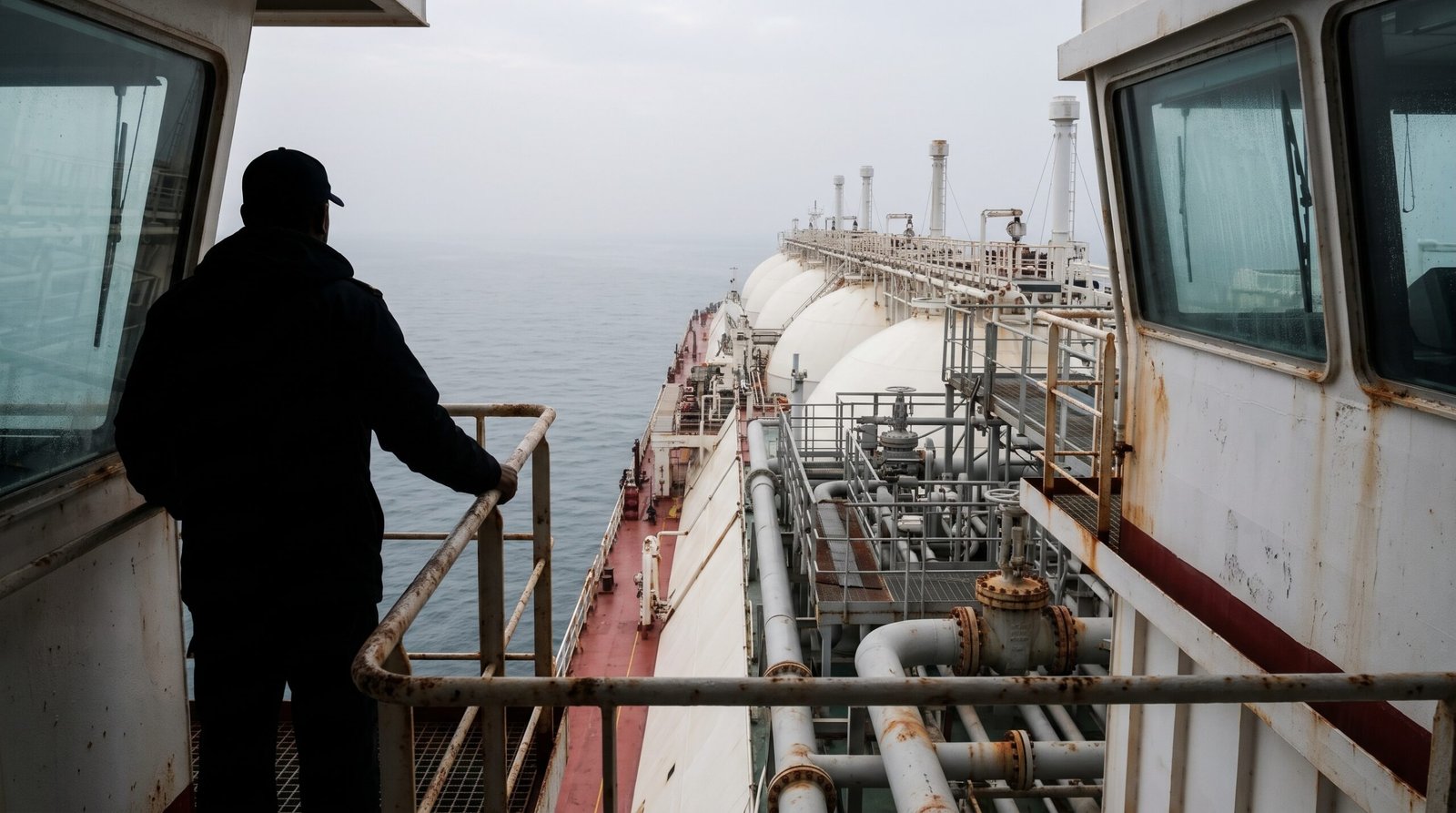
Pakistan faces a severe exacerbation of its chronic energy shortfall after a Qatari liquefied natural gas (LNG) carrier, operating under a domestically negotiated security clearance, came under a projectile attack near the Strait of Hormuz on Friday, threatening to force Islamabad into exorbitant “spot market” purchases.
The Marshall Islands-flagged vessel, Al Mayeda, was intercepted and fired upon as it approached the critical maritime chokepoint. Following the strike, ship-tracking data indicated the carrier immediately aborted its route, executing a turnaround back into the Persian Gulf.
The assault occurred despite Pakistani diplomatic efforts, as Iranian authorities had reportedly granted explicit clearance for the vessel’s safe passage just hours before the attack. Pakistan has maintained active communication channels with Iran to secure Qatari LNG shipments navigating the volatile Strait of Hormuz, with several previous cargoes successfully crossing into the Gulf of Oman over the past month under similar diplomatic arrangements.
“If the shipment cannot be delivered, Pakistan may have to purchase replacement LNG from the international spot market, where prices are more than three times their pre-war levels.”
Indian Shipping Minister Sarbananda Sonowal confirmed the vessel was targeted in a “projectile attack.” He verified that all 25 crew members, which includes six Indian nationals, remain safe, though further operational details were withheld.
Also Read: Punjab Launches Rs1.99 Trillion PIVOT Economic Plan To Drive $6.8 Billion Export Surge
Qatar Gas Transport Company Limited (Nakilat) released a statement on Sunday confirming the carrier remains operational and is currently undergoing a comprehensive damage assessment. The exact motive behind the targeting of the tanker, and whether it will make a subsequent attempt to transit the strait, remains unconfirmed.
In a formal response, Qatar’s Foreign Ministry stated that authorities are conducting a thorough investigation to identify the perpetrators. The ministry emphasized that the state reserves its right to enact necessary measures under international law and the United Nations Charter to protect its strategic maritime assets, commercial vessels, and crews.
Pakistan’s Petroleum Ministry, QatarEnergy, and Iran’s Foreign Ministry have not yet issued official statements regarding the disruption. The incident highlights the persistent supply chain vulnerabilities faced by Pakistan, which has been grappling with intense domestic energy deficits linked to broader Middle Eastern conflicts.
LNG shipments transiting the Strait of Hormuz stabilized in October at approximately 30% of their pre-war volume levels. Qatar has maintained consistent LNG exports through the waterway since September, strategically deploying older vessels to mitigate the surging insurance premiums associated with the high-risk maritime corridor.