

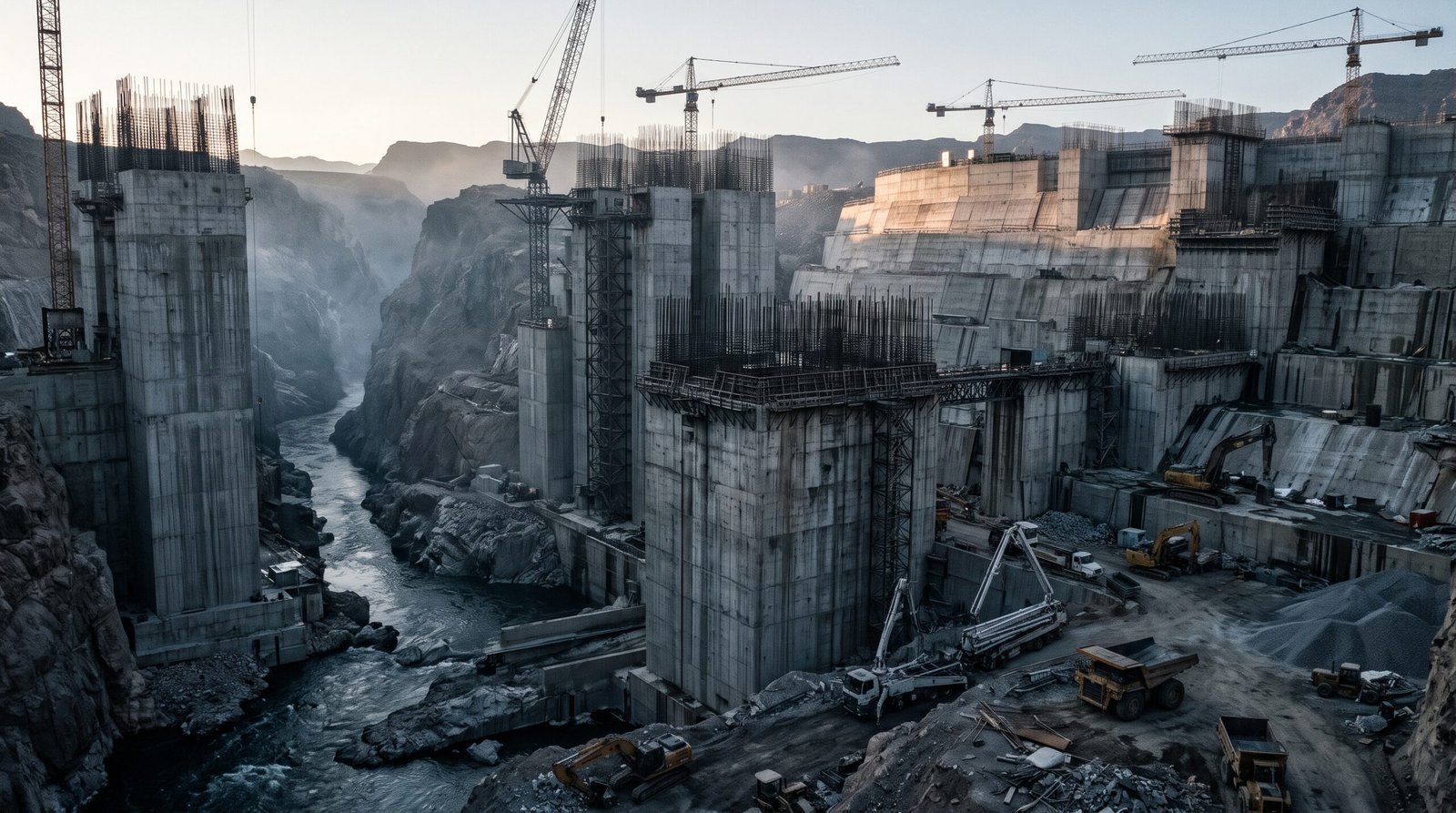
Massive currency devaluation, severe operational delays, and catastrophic flooding have forced the estimated construction cost of Pakistan’s strategic Mohmand Dam to surge by 115%, skyrocketing from its original Rs310 billion baseline to a staggering Rs666 billion.
The Water and Power Development Authority (Wapda) submitted the aggressively revised financial estimates to the Central Development Working Party (CDWP) this week. However, the committee deferred consideration of the proposal due to immediate time constraints. The project, initially approved by the Executive Committee of the National Economic Council (ECNEC) in April 2018, is currently managed by a joint venture between China Gezhouba Group Company Limited and Pakistan’s Descon Engineering Limited.
Originally timetabled for commercial completion by September 2025, the megaproject has faced a cascade of structural disruptions. Project documents confirm that physical progress stood at a sluggish 57% as of September 2026, with Rs275 billion already expended. Corporate management formally notified the Planning Commission that severe flooding across the Swat River in 2022 devastated critical diversion tunnels, forcing construction to halt for an extended period, which compounded ongoing security concerns and design modifications.
Also Read: Foreign Profit Repatriation Eclipses Net FDI By $665 Million In FY26 As Structural Deficits Widen
The macroeconomic fallout of a weakened currency constitutes the core of the financial blowout. Wapda officials attribute exactly 51% of the Rs356 billion cost increase directly to severe fluctuations in the rupee-dollar exchange rate, which systematically inflated the rupee value of the project’s foreign-currency components.
| Project Component | Revised Estimate (2026) | Escalation Magnitude |
| Total Project Cost | Rs666 billion | 115% (Up from Rs310 billion) |
| Power Generation | Rs399 billion | 105% (Up Rs204 billion) |
| Dam Construction | Rs267 billion | 134% (Up Rs153 billion) |
Refusing to blindly authorize the ballooning expenditures, the Planning Commission heavily scrutinized the validity of the foreign exchange claims. Federal authorities questioned whether the sweeping exchange-rate adjustments were legitimately justified under the joint venture’s contractual arrangements.
“Foreign-currency contract values could not automatically be recalculated using prevailing exchange rates without examining actual payment obligations and contractual terms.”
The commission issued strict directives forcing Wapda to produce granular data on all “dollar-denominated payments” and applicable exchange-rate provisions to verify the extent to which currency fluctuations can legally alter revised costs.
To assert institutional oversight, the Planning Commission formally recommended an “independent third-party assessment” of the mega-dam’s holistic financial and physical progress. This external audit will investigate resource utilization, variations in project scope, baseline cost escalation, disrupted construction timelines, and the integrity of underlying financing arrangements.
The commission further demanded an updated capital framework detailing federal allocations routed through the Public Sector Development Programme, alongside prospective provincial contributions and external sovereign loans.
Once finalized, the Mohmand Dam infrastructure is engineered to deliver 1.29 million acre-feet of critical water storage capacity, generate 2.9 billion units of hydroelectricity annually, and secure drinking water supplies for the Peshawar municipality. The revised capital proposal remains strictly pending until it clears the CDWP and secures final statutory authorization from ECNEC.