

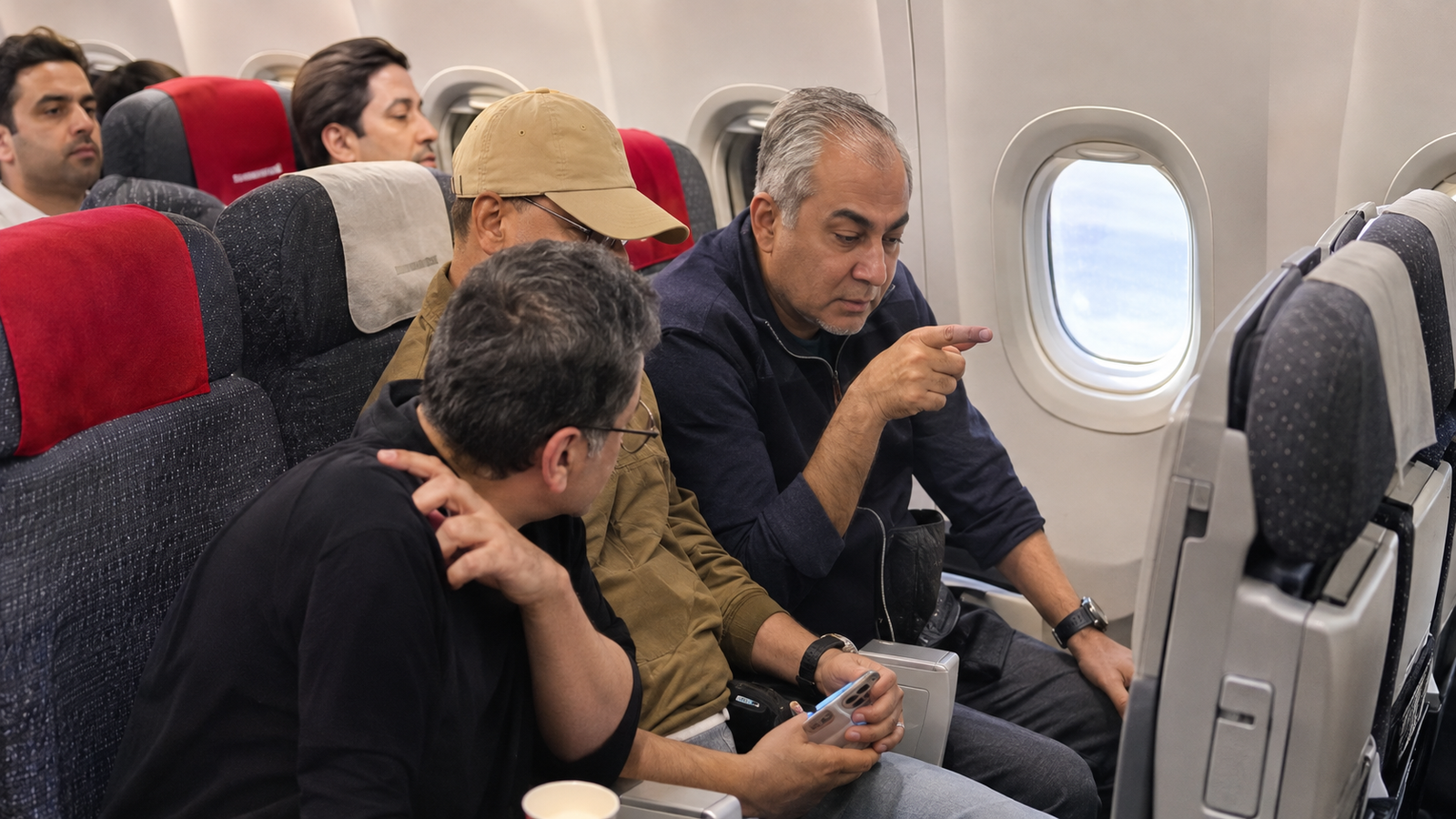
LAHORE, November 29, 2026: At a time when Pakistan is grappling with mounting debt obligations, fiscal constraints and the growing cost of governance, Federal Interior Minister Mohsin Naqvi has demonstrated how responsible leadership can contribute to protecting the national exchequer through practical measures rather than mere policy announcements.
Naqvi travelled from Lahore to Dubai on a regular commercial flight in economy class instead of using a special aircraft, setting an example of simplicity and financial prudence for public officeholders.
The interior minister travelled alongside ordinary passengers, interacted with them and posed for photographs. Footage of his journey circulated widely on social media, drawing attention to his approach towards official travel and austerity.
This is not the first time Naqvi has opted for economy-class travel. In September 2026, he reportedly adopted a similar approach while returning to Pakistan from the United Arab Emirates.
Saving the National Exchequer
The financial implications of such decisions extend well beyond the cost of an individual airline ticket.
Special aircraft operations involve substantial expenditure on aviation fuel, crew, maintenance, ground handling, airport charges and associated logistical arrangements. Depending on the aircraft and destination, these expenses can significantly exceed the cost of commercial travel.
By choosing a scheduled passenger flight, public officeholders can avoid many of these additional expenses where operational and security requirements permit.
Although the precise financial saving from Naqvi’s latest journey has not been officially disclosed, consistently adopting commercial travel across government institutions could generate considerable cumulative savings for the national exchequer.
Every rupee saved from avoidable expenditure represents an opportunity to redirect public resources towards essential services, infrastructure, healthcare, education and public welfare.
Leading Through Action Rather Than Announcements
Successive governments in Pakistan have announced austerity programmes aimed at reducing administrative expenditure. However, their effectiveness has often depended on the willingness of senior government functionaries to implement such measures themselves.
In September 2026, the federal government announced fresh austerity measures, including a 50 per cent reduction in fuel allocations for designated official vehicles, a five per cent reduction in non-employee-related expenditure and restrictions on foreign travel.
The measures also required ministers and government officials undertaking unavoidable foreign visits to travel in economy class.
Naqvi’s decision demonstrates the practical implementation of this policy at the highest levels of government.
When senior public officeholders demonstrate restraint in their own expenditure, it strengthens the credibility of government austerity initiatives and encourages similar conduct throughout the administrative machinery.
Pakistan Cannot Afford Extravagant Governance
Pakistan’s federal budget for FY2026-27 envisages expenditure of approximately Rs18.77 trillion against net federal revenues of Rs11.75 trillion, leaving a projected federal deficit of Rs7.02 trillion.
Approximately Rs8 trillion has been allocated for interest payments alone, illustrating the enormous pressure debt servicing continues to exert on government finances.
Against this backdrop, controlling discretionary expenditure is an essential component of broader fiscal management.
While reducing travel expenditure alone cannot resolve Pakistan’s structural economic challenges, eliminating unnecessary privileges, extravagant official arrangements and avoidable administrative costs can complement wider economic reforms.
The responsibility of fiscal consolidation cannot rest exclusively on taxpayers, businesses and ordinary citizens. Government institutions must also demonstrate their willingness to operate within available resources.
Breaking the Culture of VIP Privileges
For decades, Pakistan’s administrative culture has been associated with elaborate official protocols, extensive motorcades, expensive travel arrangements and privileges attached to public office.
Such practices not only increase government expenditure but can also create a visible disconnect between public representatives and the citizens they serve.
As federal interior minister, Naqvi holds one of the country’s most sensitive and demanding portfolios. His willingness to travel alongside ordinary passengers demonstrates that senior public office does not necessarily require extravagant arrangements.
However, legitimate security requirements must remain paramount, particularly for officials responsible for national security and law enforcement.
The objective should be to distinguish essential security arrangements from unnecessary expenditure undertaken merely as a matter of status or privilege.
Turning Individual Examples into Institutional Reform
The broader opportunity lies in institutionalising such practices across federal and provincial governments.
Commercial flights should become the standard option wherever feasible, while the use of special aircraft should be restricted to circumstances involving demonstrable operational, diplomatic or security necessities.
Government departments could also publish annual travel expenditure, disclose the costs associated with special aircraft operations and quantify savings achieved through austerity measures.
Such transparency would strengthen public accountability and allow policymakers to assess whether expenditure-control initiatives are delivering measurable results.
If adopted consistently across ministries, autonomous bodies and public-sector organisations, responsible travel policies could contribute to meaningful reductions in recurring administrative expenditure.
Restoring Public Confidence
Beyond the financial implications, Naqvi’s decision carries an important message about public service.
At a time when ordinary Pakistanis are being asked to shoulder higher taxes, rising living costs and economic adjustment measures, restraint by those holding public office can help strengthen confidence in government institutions.
Pakistan needs a governance culture in which protecting public resources is regarded as a fundamental responsibility rather than an exceptional achievement.
Naqvi’s economy-class journey offers a practical example of how senior government functionaries can contribute to that objective.
Ultimately, the true measure of responsible leadership is not the privileges associated with public office, but the manner in which those entrusted with authority exercise it.
For a country seeking economic stability, fiscal discipline must begin with those who govern. Protecting the national exchequer is not merely an economic necessity; it is an obligation towards every Pakistani taxpayer.