

LAHORE, November 27, 2026: Pakistan is accelerating its privatisation programme at a critical juncture in its economic history, with the federal government pursuing 17 transactions involving state-owned enterprises and public assets, even as the State Bank of Pakistan (SBP) warns that the country is showing signs of premature deindustrialisation.
The two developments highlight a fundamental challenge confronting Pakistan’s economic policymakers: whether transferring state-controlled businesses to private investors can translate into industrial expansion, improved productivity, competitive exports and sustainable employment.
Adviser to the Prime Minister on Privatisation and Chairman of the Privatisation Commission Muhammad Ali, addressing the CFA Investment Forum in Karachi on Thursday, confirmed that the government was actively pursuing transactions involving nine electricity distribution companies (DISCOs), three major airports, financial institutions and insurance companies.
The initiative forms part of Pakistan’s broader economic restructuring under the International Monetary Fund’s (IMF) $7 billion programme.
Power Sector at the Centre of Reforms
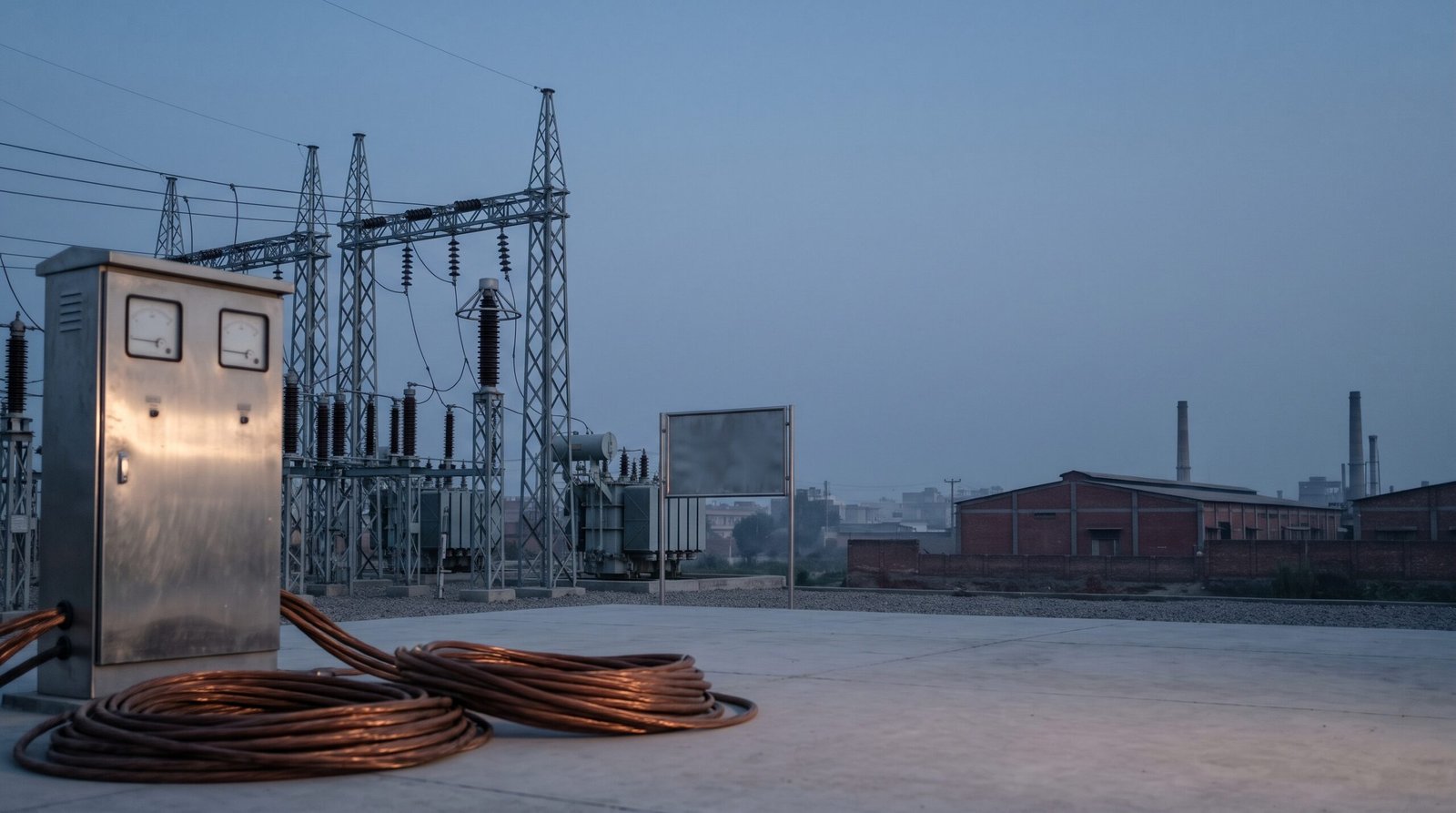
The privatisation of electricity distribution companies remains one of the most consequential components of the government’s reform agenda.
Faisalabad Electric Supply Company (FESCO), Gujranwala Electric Power Company (GEPCO) and Islamabad Electric Supply Company (IESCO) are currently undergoing due diligence, with bidding expected during the first quarter of 2027.
Hyderabad Electric Supply Company (HESCO) and Sukkur Electric Power Company (SEPCO) are next in the sequence, while Lahore Electric Supply Company (LESCO) and Multan Electric Power Company (MEPCO) also feature in subsequent phases.
The government hopes private-sector participation will improve bill recoveries, reduce transmission and distribution losses, modernise infrastructure and contain the accumulation of circular debt.
For Pakistan’s manufacturing sector, however, the ultimate test will be whether these reforms deliver affordable and reliable electricity.
Industries, particularly textiles, engineering, steel and other energy-intensive manufacturing businesses, have struggled with elevated production costs, undermining their competitiveness in international markets.
Privatisation alone cannot guarantee lower electricity tariffs unless accompanied by reforms addressing capacity payments, taxation, generation costs and regulatory inefficiencies.
Airports, Banking and Infrastructure
The government is also pursuing the outsourcing of operations at Islamabad, Lahore and Karachi international airports through long-term arrangements rather than outright asset sales.
A request for proposals for Islamabad International Airport is expected during the first quarter of 2027.
Financial institutions, including Zarai Taraqiati Bank Limited (ZTBL) and House Building Finance Corporation (HBFC), alongside State Life Insurance Corporation, are also part of the broader privatisation agenda.
Earlier this month, Muhammad Ali indicated that the government was targeting approximately Rs150 billion to Rs200 billion in privatisation proceeds during the current fiscal year.
While these transactions could provide fiscal breathing space and attract foreign capital, their long-term economic benefits will depend on transparent valuations, competitive bidding, investment commitments, effective regulatory oversight and safeguards for employees and consumers.
Also Read: Piety in Public, Exploitation In Private: Pakistan’s Forgotten Minimum-Wage Workers
SBP Sounds Alarm Over Deindustrialisation
Against this backdrop, the SBP’s Annual Report on the State of Pakistan’s Economy for FY2025-26 presents a concerning assessment of the country’s productive capacity.
The central bank observed that manufacturing’s contribution to economic output remained broadly stagnant between 1960 and 2023, while manufacturing’s share of employment has shown limited progress since 2017.
Unlike advanced economies, which transitioned towards services after achieving substantial industrial development, Pakistan risks losing manufacturing’s role as a driver of economic transformation before attaining comparable income and productivity levels.
The expansion of relatively low-productivity services, including informal retail and small-scale trading activities, has not been matched by sufficient growth in manufacturing.
Although knowledge-based services such as information technology offer considerable export potential, the broader shift towards low-value economic activities risks restricting wage growth, technological advancement and productive employment.
Pakistan’s Shrinking Export Footprint
Perhaps the most troubling indicator is Pakistan’s declining export orientation.
According to the SBP, exports averaged 16.3 per cent of GDP during the 1990s, falling to just 9.5 per cent between 2016 and 2025.
In contrast, the corresponding average for lower-middle-income economies increased from 16.6 per cent to 21 per cent.
Pakistan’s export base remains concentrated in textiles and agricultural products, with insufficient diversification into higher-value manufacturing and limited integration into global supply chains.
High energy costs, inconsistent taxation policies, inadequate infrastructure, restricted access to competitive financing and economic uncertainty have discouraged long-term industrial investment.
Without stronger export earnings, periods of domestic economic expansion risk triggering higher imports, renewed external financing pressures and another cycle of stabilisation.
Economic Growth Without Adequate Jobs
The industrial slowdown also carries significant social consequences.
Pakistan’s unemployment rate reached 7.2 per cent in FY25, while youth unemployment stood at 12.8 per cent.
The SBP estimated employment elasticity at just 0.11 between 2000 and 2025, reflecting the economy’s limited ability to generate employment through economic expansion.
With more than 60 per cent of Pakistan’s population under the age of 30, insufficient job creation threatens to turn the country’s demographic advantage into an economic liability.
Despite real GDP growth recovering to 3.7 per cent in FY26, the central bank cautioned that sustainable development requires deeper structural reforms.
Beyond Selling State Assets
Privatisation can reduce recurring fiscal burdens, improve operational efficiency and unlock private investment. However, transferring ownership of existing assets does not necessarily create new industrial capacity.
Pakistan’s economic transformation will also require greenfield manufacturing investment, competitive industrial energy tariffs, predictable taxation, technological modernisation, workforce development and export diversification.
The success of the government’s privatisation programme must therefore be assessed not merely by the billions of rupees generated through transactions, but by its contribution to productivity, investment, employment and international competitiveness.
For Pakistan, the challenge is not simply to reduce the size of the state. It is to build an economy capable of producing more, exporting more and creating better-paying jobs for its rapidly expanding workforce.