

The reactions and questions received on the writ-up quoting Iftikhar Arif’s poem “Khoon Baha”—blood money—[The Story: Where The Pen Cannot Speak, The Scoop, November 7, 2026] have forced to write this second part to cover what was left. It was not intentional. The idea was not to write a commentary on what many call the contours of ‘New Great Game’. However, the context of the poem certainly demands it, hence this part two of the story.
The New Great Game: Containment by Instability
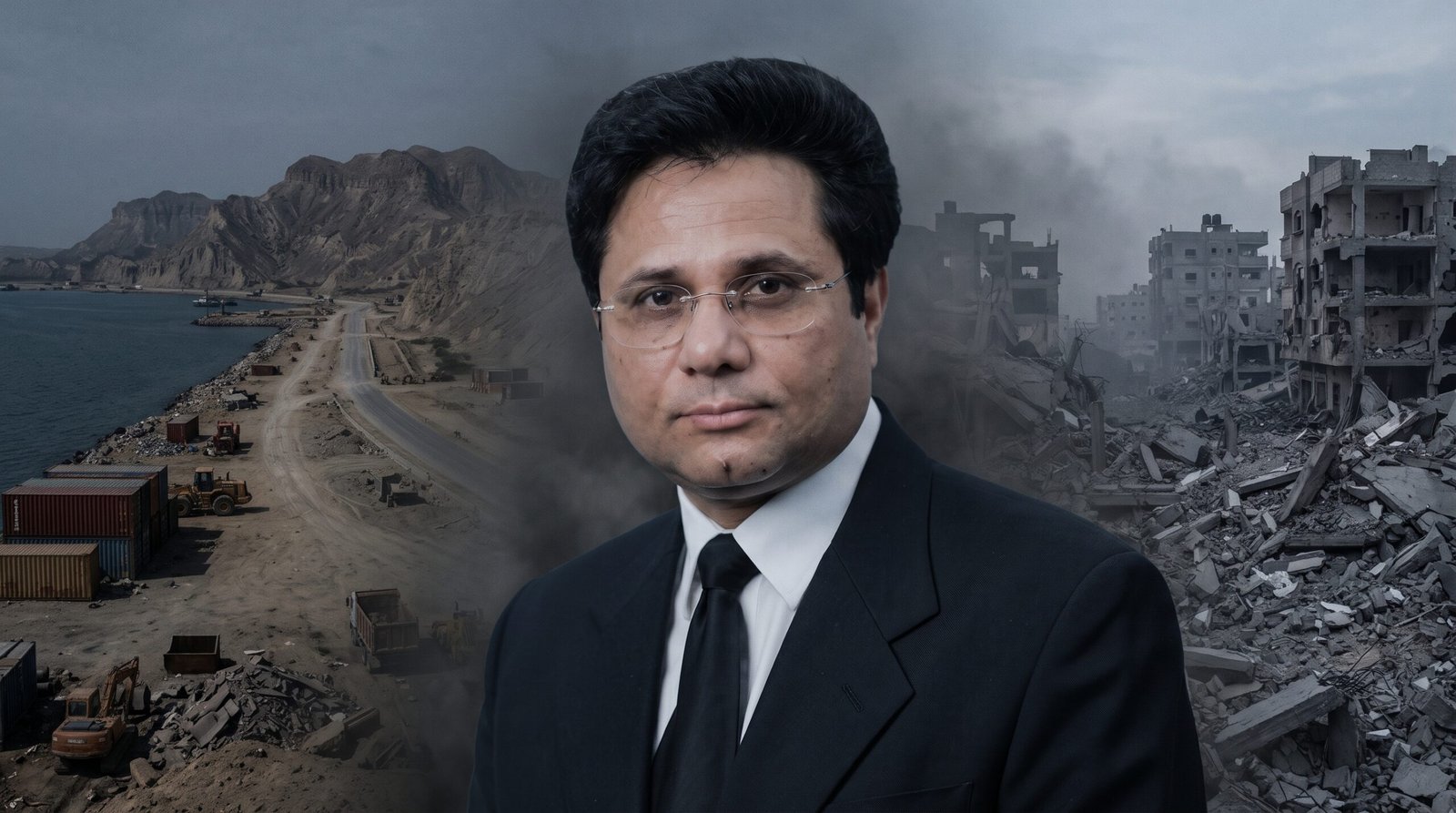
Before turning to the specific cases, it is necessary to name the geopolitical architecture within which these local tragedies unfold. A growing body of analysis suggests that the instability in Pakistan’s Balochistan and Gilgit-Baltistan is not merely the product of internal grievances or localized insurgencies. It is being actively cultivated as part of a broader strategy by India, Israel, and Western powers to contain China by destabilizing its western periphery.
The logic is straightforward. The China-Pakistan Economic Corridor (CPEC) is the flagship of Beijing’s Belt and Road Initiative. Gwadar Port, at the heart of CPEC, offers China a route to the Arabian Sea that bypasses the Strait of Malacca—a chokepoint under American naval dominance. For Washington and its allies, the prospect of a stable, connected corridor linking western China to the Gulf is a strategic threat. A balkanized or insurgency-wracked Pakistan is an unreliable corridor. An unstable Balochistan is a dagger pointed at the heart of CPEC.
This is not conspiracy theory; it is strategy openly discussed in Western and Israeli policy circles. Retired U.S. Army Lt. Col. Ralph Peters’ “Blood Borders” map, published in 2006, sketched a “better” Middle East with redrawn borders. While never official policy, it captured a persistent temptation in Washington: that fragmenting unmanageable states into smaller, pliable entities serves American interests. In Balochistan, this logic finds its contemporary application.
Israel’s interest is equally documented. Israeli publications and strategic communications platforms have increasingly portrayed Balochistan as an opportunity—a place where secular insurgent groups could be cultivated as allies against both Pakistan and Iran, and where pressure could be applied to China’s connectivity ambitions. The quiet triangulation linking Israel, the Gulf states, and India is not a fantasy; it is an emerging security architecture marketed as connectivity but functioning as containment.
Pakistan’s military leadership has been explicit. In 2025, DG ISPR Lt. Gen. Ahmed Sharif Chaudhry accused India of adopting “state-sponsored terrorism as a policy against Pakistan”, specifically naming Balochistan as a target of Indian destabilization. He presented what he described as forensic evidence, intercepted communications, and confessional statements linking Indian intelligence to attacks on civilians and infrastructure. India, as expected, rejects these allegations as “baseless” and deflects attention to Pakistan’s internal governance failures.
The truth of these specific allegations will be adjudicated by history. But the broader pattern is undeniable: the instability in Pakistan’s western provinces serves the strategic interests of those who seek to contain China. Whether by design or by exploitation, the suffering of the Baloch and the people of Gilgit-Baltistan has become a currency in a great power game.
Gaza: The Blood Money That Will Never Be Paid
If Balochistan is the poem’s first stanza, Gaza is its most obscene refrain. Since October 2023, more than 74,000 Palestinians have been killed in Israeli attacks on Gaza, with over 175,000 injured. The United Nations Independent International Commission of Inquiry concluded in September 2025 that Israeli authorities “have committed and are continuing to commit genocide against the Palestinians in the Gaza Strip”, finding the actus reus of genocide in killing, causing serious bodily or mental harm, deliberately inflicting conditions of life calculated to bring about physical destruction, and imposing measures intended to prevent births. The Commission found that Israeli President Isaac Herzog, Prime Minister Benjamin Netanyahu, and then-Defence Minister Yoav Gallant incited genocide.
A ceasefire took effect in October 2025. It exists on paper only. Over the past year, Israeli violations have killed more than 1,470 Palestinians and wounded over 5,180. Nearly two million Palestinians remain displaced. More than 80 percent of structures in Gaza have been damaged, and nearly two-thirds destroyed. The UN estimates $71.4 billion will be needed over ten years for recovery.
The heirs in Gaza demand blood money. They demand an accounting. The judges of the international order—the ICJ, the ICC—have issued orders and warrants. The saints—the governments that brokered the ceasefire—issue statements. And yet the dagger remains unsheathed. The throne and the army stand together. The blood money is never paid.
The Enlightenment promised humanity an exit from the twin tyrannies of throne and altar. The American and French revolutions, the abolition of slavery, the extension of suffrage, the universal declaration of human rights—these were not accidents of history.
They were the slow, painful product of humanity learning to govern itself without the permission of kings or priests. That inheritance is now being dismantled. And the instrument of its dismantling is war mania sanctified by religion.
The Clergy and the Crown, Reunited
The unholy alliance Arif Iftikhar gestures toward—the throne, the dagger, the crown, the army—has found a new governing ideology: religious nationalism. The logic is ancient: the clergy provides moral legitimacy, the crown provides coercive power, and together they define who belongs and who does not. Those who question the arrangement are not dissenters; they are traitors and terrorists. The judges complete the obligations of power. The saints look away.
Gaza and the Sanctification of Genocide
In Gaza, the unholy alliance takes a different form but serves the same function. The state of Israel has mobilized religious nationalism—the claim to a divine mandate, the language of Amalek, the invocation of biblical war—to justify what the UN Commission of Inquiry has found to be genocide.
The clergy of one tradition sanctifies the killing; the crown of one state provides the weapons; the army of one nation carries out the destruction. And the saints of the international community, bound by the same unholy alliance of geopolitical interest and religious affinity, issue statements and sanctions that change nothing.
The Enlightenment principle that all human beings possess equal dignity, that no crown or clergy can revoke it, has been suspended. The Palestinians of Gaza are not treated as rights-bearing persons. They are treated as a problem to be eliminated—by starvation, by bombardment, by the deliberate destruction of the conditions of life. The language of the killers is the language of purification. The blood money will never be paid because the victims were never granted the status of the human.
War Mania as the New Opium
The Enlightenment critique of religion was not a critique of faith. It was a critique of the alliance between spiritual authority and temporal power—the use of sacred language to justify earthly tyranny. That critique has been abandoned. In its place, a new war mania has emerged, in which religion serves as the emotional fuel for state violence.
In Pakistan, a mafia-like industry does not merely target minorities. It creates a permanent atmosphere of fear in which any citizen can be accused, any mob can become judge and executioner, and the state can present itself as the protector of the faith while it crushes the poor and silences the critics. The modern-day war mania is not only confined to an external enemy. It is against the internal other—the helpless minorities as targeted by the proponents of Hindutva, the activists of the right of masses, and even the lawyers who defend them.
In Gaza, the war mania is against an entire population. It is sustained by a narrative of eternal victimhood and divine entitlement, in which the killing of children is justified as self-defense and the destruction of hospitals is called collateral damage. The clergy blesses the soldiers. The crown provides the munitions. The army carries out the genocide. And the saints, bound by the same unholy alliance, send thoughts and prayers.
The Enlightenment Inheritance at Risk
What is at stake is not merely the lives of the horsemen—the disappeared of Kashmir or elsewhere, and, of course, the protesters of Gaza and elsewhere. What is at stake is the entire inheritance of the Enlightenment: the idea that power must be accountable, that law must be just, that no authority—whether king, priest, or general—is above the rights of the individual.
That inheritance was won by centuries of struggle against the alliance of throne and altar. It is being lost in a generation. The mechanism is not a single coup or a single war. It is the gradual normalization of the idea that some lives do not count, that some demands for rights are crimes, that some killings are sacred.
What the Pen Must Do
The people in Arif Iftikhar’s poem say: “Write down the whole story. Who received, and how, their own blood money—write it all”. The answer is: no one received it. The killers never paid. The judges completed the obligations of power, not of justice. The saints did not supervise. The throne, the dagger, the crown, and the army stood together against the people.
That is the story. The pen must tell it. But the pen must also tell the second half of the story: how we arrived here. How the Enlightenment’s promise of a world without kings and priests was betrayed by the alliance of religious nationalism and state power. How war mania became the new opium of the masses, and how the clergy and the crown found each other again. The pen must record the names of all those disappeared in anywhere in the world. It must write the numbers of those killed in Gaza.
The pen must document all the executions under any pretext, the torture of dissidents, the massacres by military junta, the lynchings by religious zealots in any part of the globe. It must name the laws, the courts, the security apparatus, the international silence that makes the blood price impossible to collect.
And it must refuse the comfort of the saints. The saints looked away. The saints are still looking away. The pen cannot. The blood money is still owed. The debt is still due. The Enlightenment inheritance is still worth defending. And the pen, ashamed as it is, must write it down even if this series has many more parts.