

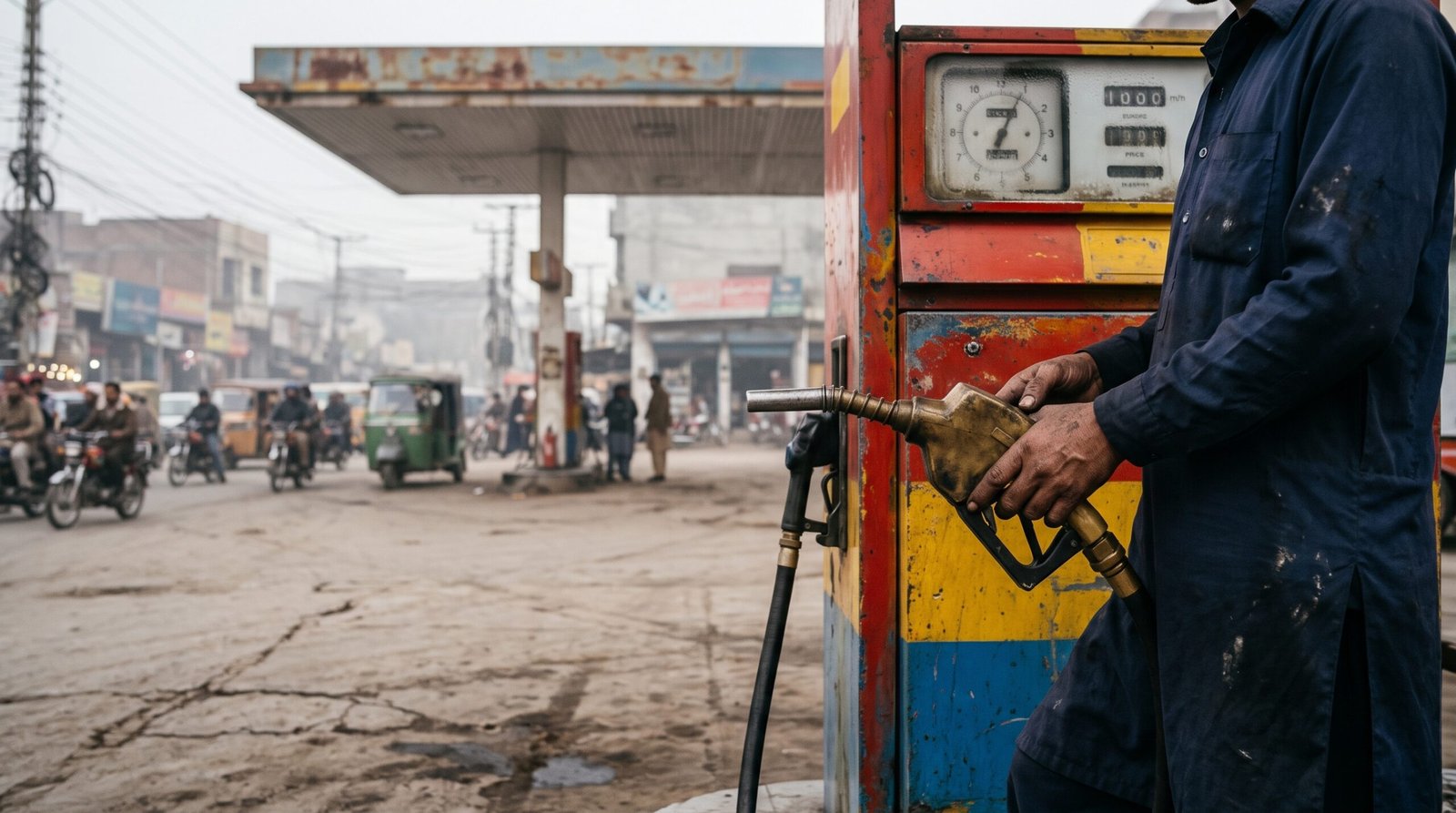
The federal government has mandated a second consecutive reduction in domestic fuel prices, cutting the ex-depot rate for petrol by Rs9.41 to Rs352.59 per litre and high-speed diesel (HSD) by Rs5.56 to Rs382.25 per litre, effective November 6, 2026.
The Oil and Gas Regulatory Authority (OGRA) confirmed the revised pricing structure in an official press release, stating the adjustments were executed under the “petroleum products pricing mechanism” formally approved by the federal government.
This latest adjustment compounds a previous rate cut implemented just one day prior. On Wednesday, authorities reduced the price of petrol by Rs7.06 to Rs362.00 per litre and diesel by Rs3.71 to Rs387.81 per litre, signaling an aggressive near-term downward revision in domestic energy costs.
| Fuel Type | Previous Price (Per Litre) | New Price (Per Litre) | Net Reduction |
| Petrol | Rs362.00 | Rs352.59 | – Rs9.41 |
| High-Speed Diesel (HSD) | Rs387.81 | Rs382.25 | – Rs5.56 |
The domestic price relief contrasts sharply with emerging upward pressure in international energy markets. Globally, crude oil futures advanced on Thursday as commodity investors assessed the geopolitical trajectory of the US-Israeli conflict with Iran. This market recalibration follows heavy electoral losses sustained by President Donald Trump’s Republican Party during the US midterm elections earlier in the week, introducing new political uncertainties regarding future Middle East policy.
“Globally, Brent crude futures rose on Thursday as investors weighed the future course of the US-Israeli war with Iran after President Donald Trump’s Republican Party suffered heavy losses in midterm elections this week.”
Reflecting these geopolitical tensions, benchmark Brent crude futures escalated by $2.19, or 2.3%, reaching $96.81 a barrel as of 1255 GMT. Simultaneously, US West Texas Intermediate (WTI) crude futures gained $1.32, or 1.5%, to settle at $89.44 a barrel.
The divergence between falling domestic fuel prices and rising international crude benchmarks underscores the complex fiscal balancing act facing Pakistan’s petroleum regulators, who must insulate domestic consumers from inflationary shocks while managing the fiscal constraints of state-subsidized pricing mechanisms.