

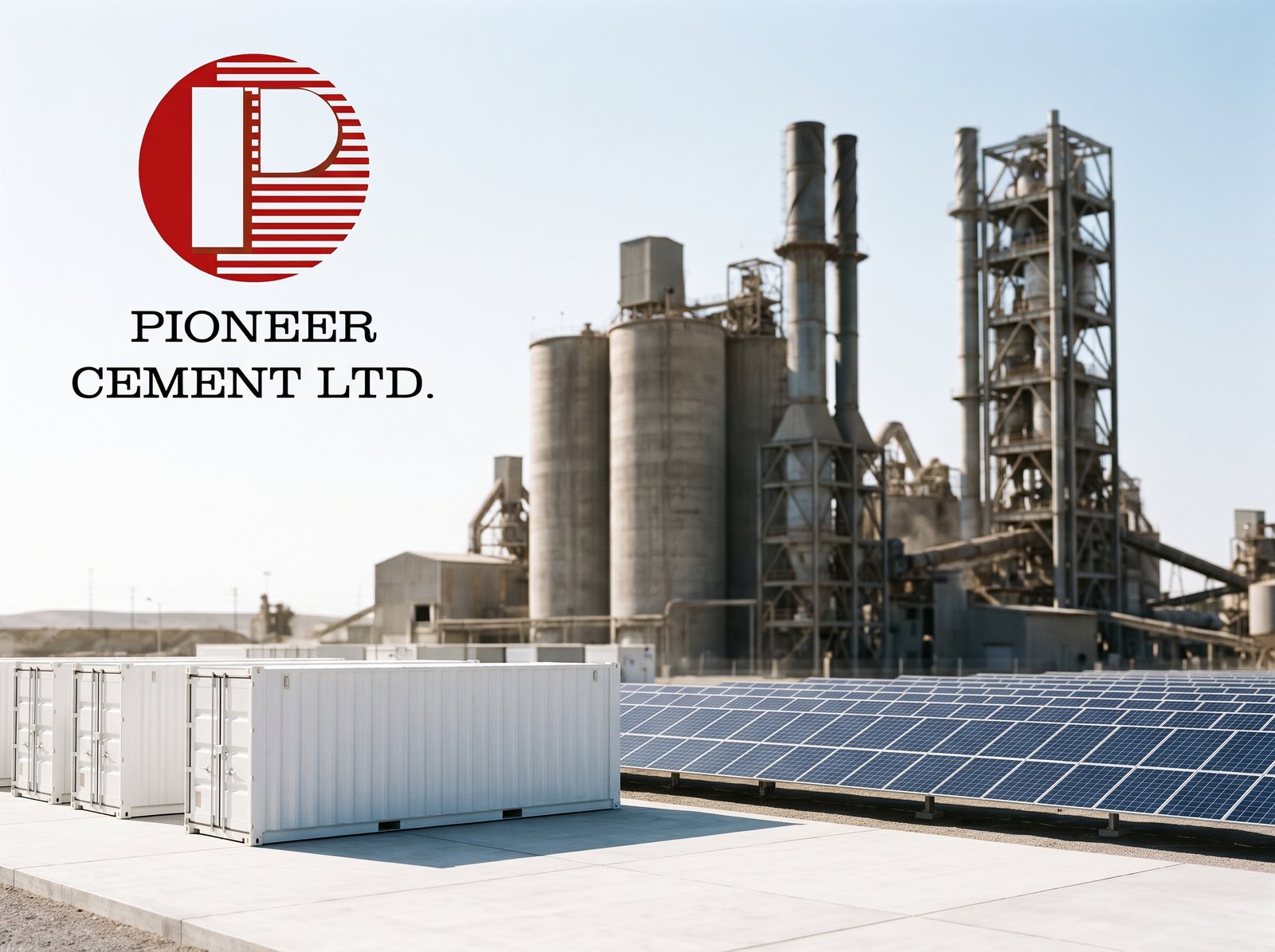
Pioneer Cement Limited (PSX: PIOC) has dramatically accelerated its transition away from Pakistan’s expensive national grid, signing a landmark contract to install a 15-megawatt (MW) battery energy storage system alongside an additional 10MW solar power installation. The aggressive capital expenditure, targeted for its massive Chenki manufacturing facility in Khushab, Punjab, signals a structural shift in how Pakistan’s heavy manufacturing sector is insulating itself from volatile domestic energy prices and prohibitive industrial tariffs.
In a formal regulatory notice submitted to the Pakistan Stock Exchange (PSX) on Friday, the cement manufacturer confirmed it had entered into a strategic agreement with Pragmatic Engineering Solutions FZE and China’s Sungrow Power Supply Co., Ltd. Sungrow is globally recognised as a tier-one manufacturer of solar inverters and energy storage solutions, indicating that Pioneer Cement is opting for cutting-edge, high-efficiency Chinese technology to modernise its power matrix.
The most critical component of the new agreement is the Battery Energy Storage System (BESS). The system will feature a power capacity of 15MW and a deep storage capacity of 30 megawatt-hours (MWh). For highly energy-intensive industries like cement manufacturing, a BESS acts as a financial game-changer through a process known as “peak shaving.” It allows the facility to store excess, practically free solar electricity generated during peak daylight hours and deploy it during the evening when national grid tariffs are at their most expensive. The company explicitly noted that the project will massively reduce dependence on the state grid, slash operating expenses, and provide crucial voltage stability to the plant’s heavy machinery.
Also Read: First IBL Modaraba Approves Strategic Subsidiary To Target Pakistan’s Electric Vehicle Market
This latest 10MW solar addition and 15MW storage procurement is entirely separate from Pioneer Cement’s previously disclosed renewable energy mega-projects. Just days earlier, on November 3, the company announced the successful energisation of a 28.265MW solar power plant at the exact same Khushab facility. That initial plant is already undergoing an immediate expansion to 31MW, which management expects to become fully operational within a month. When the newly announced 10MW installation is completed, Pioneer Cement’s total dedicated solar generation capacity will easily eclipse 40MW, ranking it among the largest captive industrial solar footprints in the country.
The economic rationale driving this rapid green integration is rooted in sheer survival and margin protection. Cement manufacturing is notoriously energy-heavy, with fuel and power traditionally accounting for the lion’s share of the cost of goods sold (COGS). With successive hikes in base electricity tariffs and the imposition of heavy capacity payments by the federal government, grid reliance has become a severe liability. Prior to this latest 10MW and BESS announcement, Pioneer Cement had already estimated that environmentally sustainable power sources would comfortably meet approximately 45 per cent of its total annual electricity requirements.
While Pioneer Cement has not publicly disclosed the exact financial investment required for the Sungrow BESS and new solar arrays, the installation is scheduled for completion by March 31, 2027. Market analysts project that the cascading financial savings generated by bypassing peak grid hours and offsetting daytime consumption will drastically lower the company’s per-ton production cost, directly bolstering gross margins and operational profitability in a highly competitive domestic construction market.