

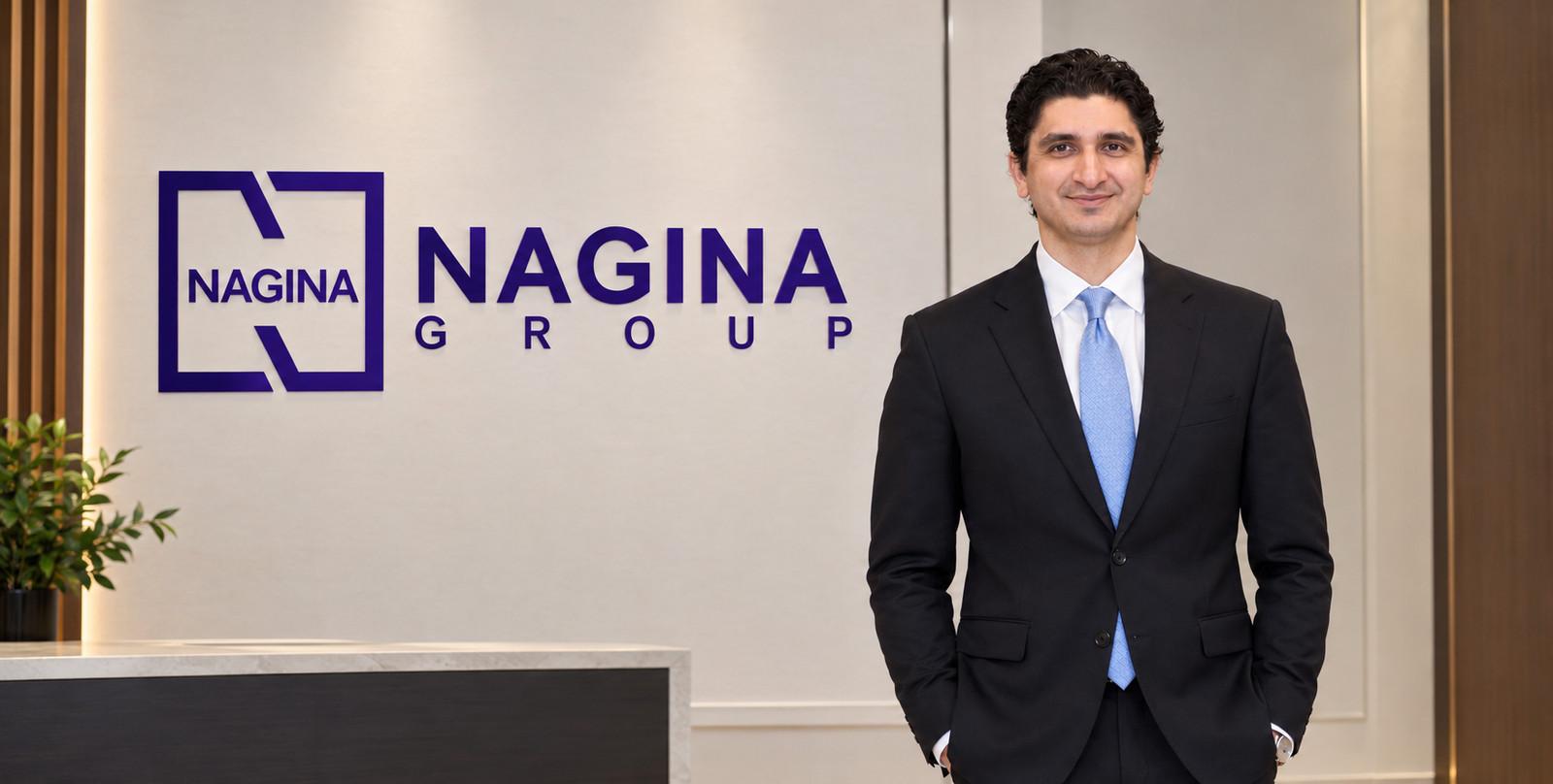
LAHORE: Nagina Group is pursuing technological modernisation, renewable energy investments and diversification into new business sectors as the nearly six-decade-old family enterprise seeks to strengthen its competitiveness and long-term financial resilience, Director Omer Ellahi Sheikh has revealed in an exclusive interview with The Scoop.
Sheikh, who also serves as Chief Executive Officer of 19Q Luxury Residences in Gulberg, disclosed plans for another luxury residential development, 67B3 Residences, while outlining the group’s interest in battery energy storage systems, wind power and higher-value textile manufacturing.
The fourth-generation businessman believes Pakistan must move away from a consumption-led economic model towards one driven by industrial investment, manufacturing and exports.
“Pakistan’s economic future depends upon moving from a consumption-led model towards one increasingly driven by investment, manufacturing and exports,” Sheikh told The Scoop.
Nagina Group’s Strategy: Modernisation Over Expansion
Discussing the evolution of Nagina Group over the past decade, Sheikh said the organisation had shifted from traditional industrial expansion towards technological modernisation, operational efficiency, renewable energy and financial discipline.
Rather than concentrating exclusively on increasing manufacturing capacity, the group is prioritising productivity improvements, capital allocation, automation and institutional governance.
“As a fourth-generation family enterprise with a history spanning nearly six decades, we recognise that the competitive advantages of the past must continually be reinforced through investment and innovation,” he explained.
According to Sheikh, investments in modern machinery, automation and process optimisation are central to making the group’s industrial operations more resilient and internationally competitive.
Over the next five years, Nagina Group intends to continue balancing, modernisation and replacement of its textile manufacturing infrastructure, while increasing specialised production and strengthening integration with international supply chains and sustainability programmes.
The group is also evaluating opportunities in real estate, financial investments and other sectors.
Sheikh emphasised that sustainable business growth should not be measured solely through increasing assets or manufacturing capacity.
“Our philosophy is that sustainable growth should be measured not merely by expanding assets or capacity, but by improving productivity, resilience, profitability and long-term shareholder value,” he said.
Textile Industry Needs Competitive Energy And Predictable Policies
Sheikh identified energy costs, taxation, financing expenses and policy uncertainty as major challenges undermining Pakistan’s textile competitiveness.
He said competing textile-producing countries frequently benefit from more predictable regulatory environments, competitive energy tariffs and better access to long-term financing.
While acknowledging recent progress towards more competitive industrial electricity pricing and improved financing facilities, Sheikh called for a comprehensive industrial competitiveness framework.
Such a framework, he argued, should ensure predictable taxation, timely refunds, internationally competitive energy pricing and continuity in economic policymaking.
He also stressed that manufacturers must improve their own productivity, automation, sustainability and product diversification instead of depending exclusively on government concessions.
With appropriate reforms, he believes Pakistan’s textile industry could contribute significantly more to employment generation, foreign exchange earnings and national economic growth.
Also Read: Karachi Tax Bar Urges FBR To Remove IRIS Wealth Statement Restriction For Returning Residents
Nagina Group Explores Battery Storage And Wind Power
One of the significant developments disclosed during the interview was Nagina Group’s growing interest in renewable energy technologies.
Sheikh confirmed that the group is expanding its solar energy footprint while exploring investment opportunities in battery energy storage systems (BESS) and wind power.
“We are currently expanding our solar footprint and exploring opportunities in Battery Energy Storage Systems (BESS) and wind power, as we believe renewable energy will play an increasingly important role in Pakistan’s economic future,” he said.
The strategy reflects a broader effort to improve energy efficiency and reduce exposure to the uncertainties affecting industrial electricity supply and pricing.
However, Sheikh did not disclose proposed investment amounts, generation capacities or implementation timelines for these potential projects.

67B3 Residences: Another Luxury Development In Gulberg
Moving beyond textiles, Sheikh confirmed that he is preparing to launch 67B3 Residences, a new residential development in Lahore’s Gulberg area.
The project follows his experience as CEO of 19Q Luxury Residences, which was developed around the concept of premium apartment living in one of Lahore’s most established commercial and residential districts.
“In real estate, we are building on our experience with 19Q Luxury Residences and are launching our next project, 67B3 Residences in Gulberg,” Sheikh revealed.
Although detailed investment figures, apartment configurations and completion schedules were not provided, the announcement signals his continued interest in Lahore’s luxury residential property segment.
Discussing 19Q, Sheikh said his original objective was to introduce a residential experience combining location, design, privacy, amenities and professional building management.
The development offers facilities including function rooms, a swimming pool, gym and steam room.
According to Sheikh, professionally managed residential developments can provide an alternative to the responsibilities associated with maintaining large independent houses.
Are Lahore’s Wealthy Residents Moving Towards Apartments?
Lahore has traditionally been a market dominated by independent houses and residential plots, particularly among affluent buyers.
However, Sheikh believes preferences are gradually changing as buyers increasingly prioritise convenience, security, accessibility and professionally managed properties.
“Independent houses and plots will always have their place, but families increasingly value prime locations, security, convenience and a managed lifestyle,” he observed.
He argued that luxury apartments situated close to business districts, educational institutions, restaurants and essential services offer practical advantages for families seeking a more convenient urban lifestyle.
Sheikh expects professionally managed apartment developments to become increasingly attractive as Lahore continues to urbanise.
His observations, however, reflect his experience in the premium property segment rather than independently established market-wide sales or occupancy trends.
Luxury Real Estate Faces Risk Of Speculative Oversupply
Despite his optimism about high-end residential developments, Sheikh acknowledged the possibility of oversupply in Pakistan’s luxury apartment market.
He warned that projects driven primarily by speculation rather than genuine end-user demand could face difficulties.
“I believe the luxury apartment segment has genuine long-term potential in Pakistan, particularly in prime urban locations. However, there is certainly a risk of oversupply where developments are driven primarily by speculation rather than genuine end-user demand,” he said.
According to Sheikh, buyers are becoming more discerning and increasingly evaluating developers on construction quality, timely delivery, professional management and long-term property maintenance.
He maintained that a project’s success depends on more than marketing or location.
Developers who deliver on their commitments and maintain building standards after possession, he argued, will be better positioned to succeed over the longer term.
Textiles Versus Real Estate: Where Should Capital Go?
As an executive involved in both manufacturing and property development, Sheikh offered his assessment of the contrasting investment characteristics of the two sectors.
Textiles, he explained, are operationally intensive and exposed to global demand fluctuations, energy prices, exchange rates and international competition.
Real estate requires substantial upfront capital and longer investment horizons but can offer capital appreciation and recurring income.
Rather than favouring one sector, Sheikh advocates maintaining a balanced investment portfolio.
Nagina Group continues to invest in balancing, modernisation and replacement of textile machinery, while Sheikh’s real estate interests are expanding through the planned 67B3 Residences development.
Three Reforms Pakistan Needs To Attract Investment
Asked what Pakistan must do to encourage domestic and foreign investors, Sheikh identified three fundamental reforms.
First, he called for a long-term economic roadmap capable of providing continuity across successive governments.
“Businesses make investment decisions over decades, not electoral cycles,” he said.
Second, he advocated greater engagement between political leadership and the business community to ensure that economic policies reflect practical commercial realities.
Third, Sheikh argued for stronger free-market principles, including greater competition, reduced unnecessary government intervention, simplified regulations and a level playing field.
“Capital will naturally flow towards markets where investors can compete fairly, earn reasonable returns and operate without excessive uncertainty,” he maintained.
His remarks reflect concerns among business leaders about the impact of regulatory unpredictability on long-term capital investment.
The Vision For 2030
Looking towards 2030, Sheikh expects Nagina Group to strengthen its presence in higher-value textile manufacturing while expanding its renewable energy footprint.
In real estate, his priorities include maintaining management standards at 19Q Luxury Residences, delivering 67B3 Residences and initiating another development.
He also emphasised the importance of professional management, corporate governance and sustainable business growth.
Reflecting on his ambitions as a fourth-generation entrepreneur, Sheikh said he wanted his professional legacy to extend beyond financial performance.
“Ultimately, the legacy I want to leave is one of giving back to society through job creation and employment,” he said.
For Sheikh, businesses must create livelihoods, develop talent and contribute to Pakistan’s economic progress alongside generating profits.
His outlook combines continued investment in established manufacturing operations with diversification into energy and property development, while placing policy predictability and industrial competitiveness at the centre of Pakistan’s long-term economic prospects.