

Pakistan’s textile and apparel manufacturing base is targeting expanded institutional access to United Kingdom high-street retailers and critical “annual tariff exemptions” through heightened compliance with international sustainability conventions.
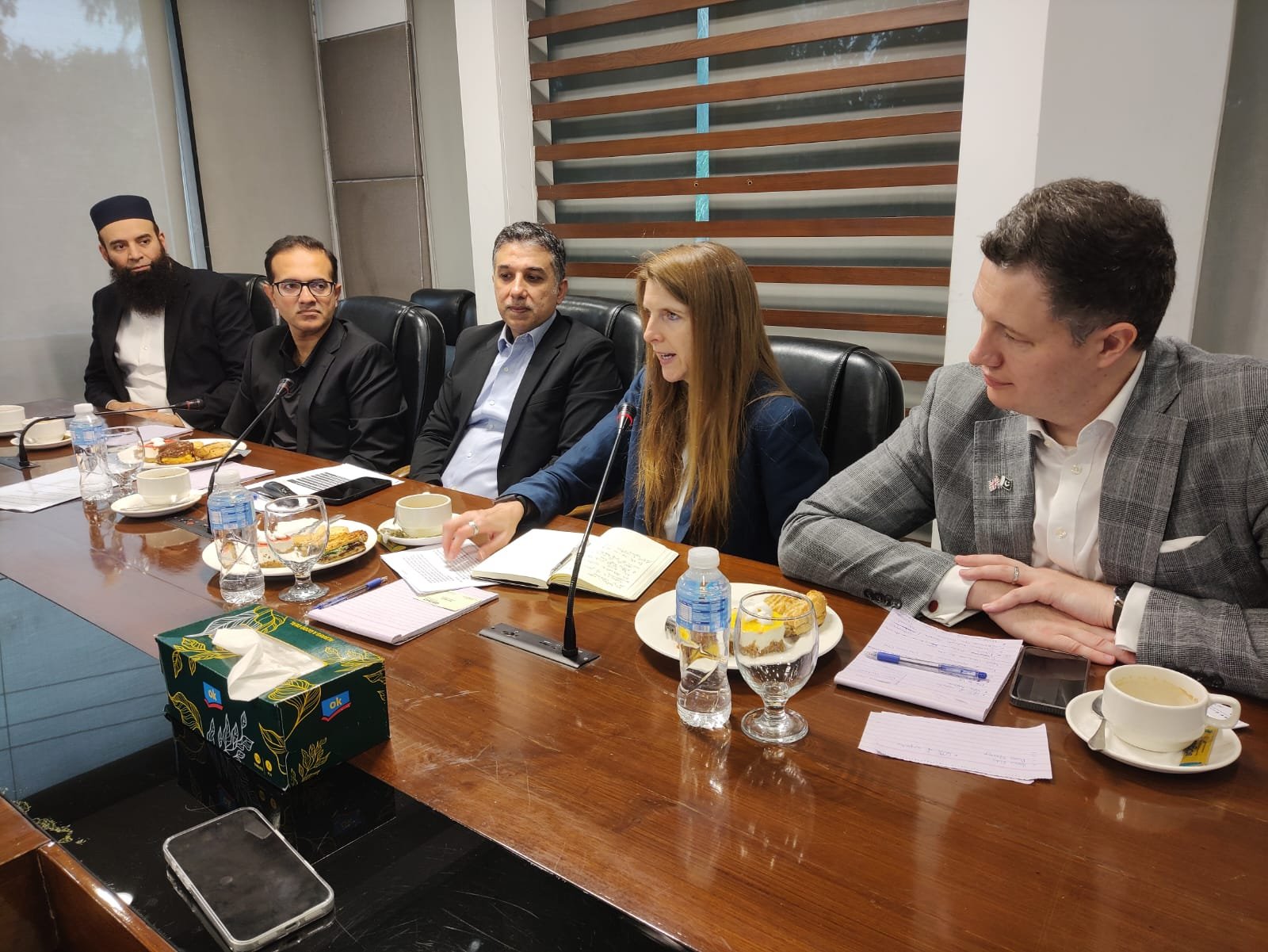
The strategic trade framework was established during a high-level bilateral session at APTMA House in Lahore between the British High Commission and the executive leadership of the All Pakistan Textile Mills Association (APTMA). The negotiations focused on cementing commercial, institutional, and technical cooperation across the entire textile value chain.
British High Commissioner to Pakistan, Her Excellency Jane Marriott CMG OBE, acknowledged the domestic industry’s ongoing efforts regarding diversification and adherence to international sustainability protocols. However, she issued a firm directive to the broader business community and export sector to execute immediate measures for the total implementation of all global conventions. This compliance is a prerequisite to securing and maintaining tariff exemptions for imports entering the UK market.
“Stronger engagement with British stakeholders could improve competitiveness, sustainability, innovation and international market access across every segment of Pakistan’s textile industry.”
To bypass intermediaries and secure direct market share, the High Commissioner urged Pakistani textile entrepreneurs to actively penetrate UK-based trade fairs and exhibitions. She emphasized the necessity of forging direct, commercially viable linkages with British high-street brands and retail consortiums.
Furthermore, Marriott pushed for actionable collaboration in research and development, specifically targeting the highly lucrative “technical and specialized textiles” segment. She advised APTMA members to proactively identify and onboard British consultants and sector specialists to bridge existing industrial capacity gaps.
APTMA Chairman Asad Shafi positioned the textile and apparel sector as the primary macroeconomic engine for deepening bilateral trade and investment between Islamabad and London. Shafi outlined a strategic requirement for cross-border integration with British textile laboratories, testing facilities, universities, and research centers to strictly enforce quality assurance and technical capacity building.
The high-level negotiations featured a core diplomatic and industrial delegation. The British High Commission was represented by High Commissioner Jane Marriott, Head of Lahore Office Ben Warrington, and Lahore Outreach Lead Reema Salman. They were formally received by APTMA’s executive leadership, including Chairman Asad Shafi, Vice Chairman Muhammad Anees Khawaja, Chairman North Muhammad Siddique Bhatti, Senior Vice Chairman North Habib Anwar Sheikh, and Secretary General Raza Baqir, accompanied by over a dozen regional corporate officers.
Shafi stressed the immediate necessity of drafting a practical, formalized framework for cooperation between APTMA and relevant UK institutions. This framework is intended to translate shared bilateral priorities into concrete industrial initiatives spanning spinning, weaving, processing, garments, and export-oriented home textiles.
Closing the session, APTMA Chairman North, Muhammad Siddique Bhatti, reaffirmed the association’s commitment to executing durable partnerships. He noted that integrating British institutional expertise is now a critical operational priority to drive manufacturing productivity, scale skills development, and ultimately secure unrestricted access to the UK consumer market.